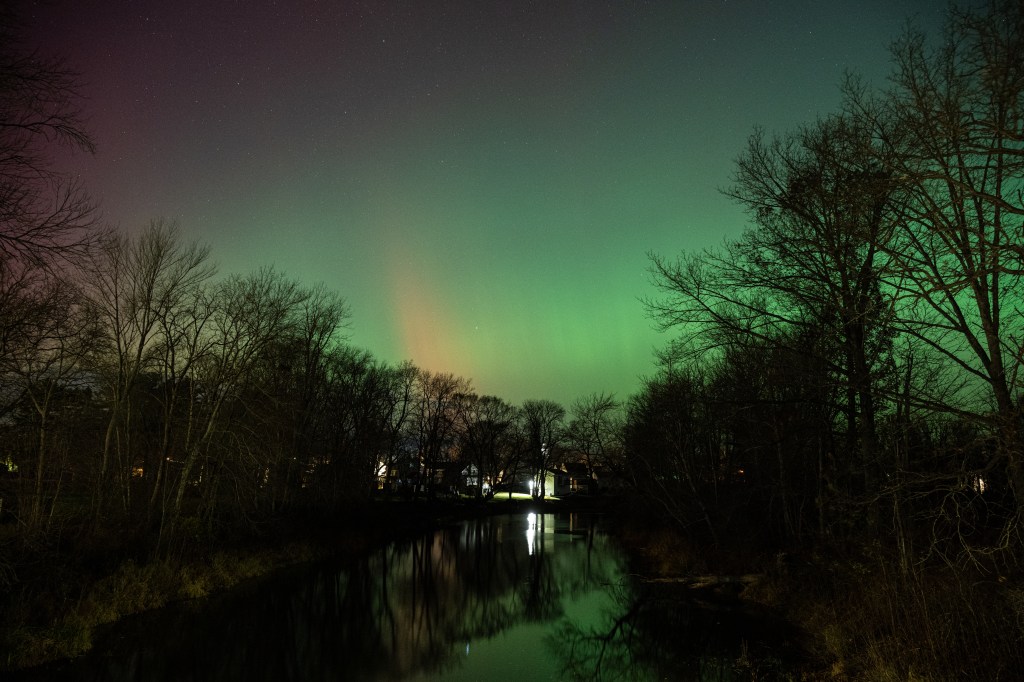
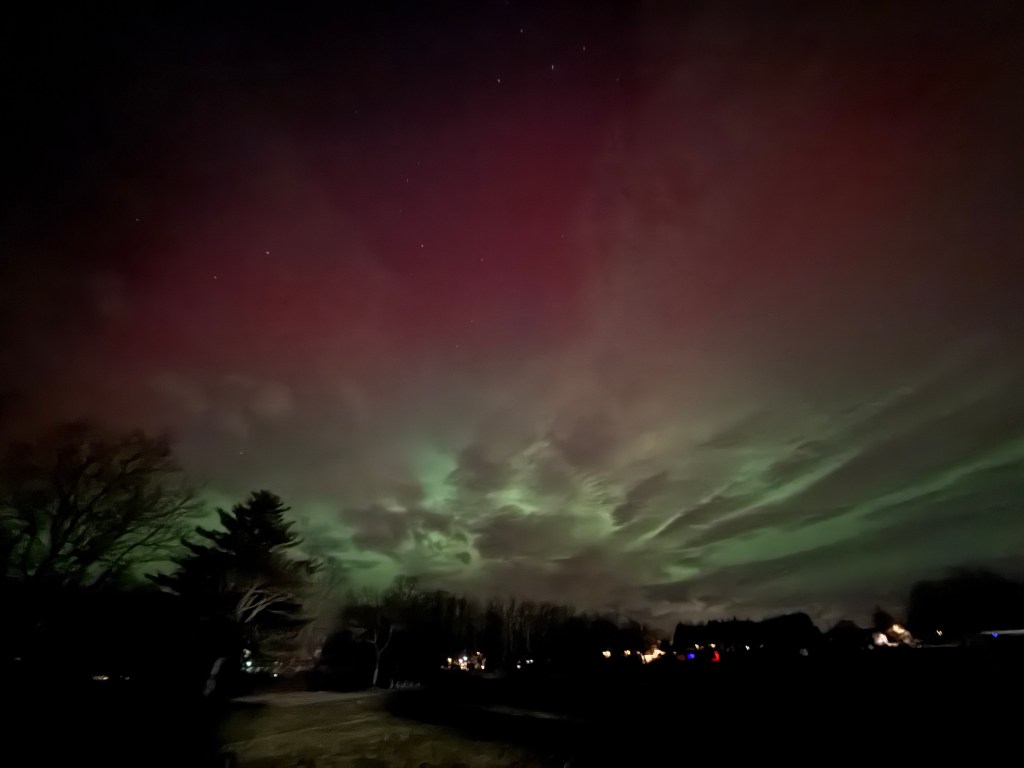
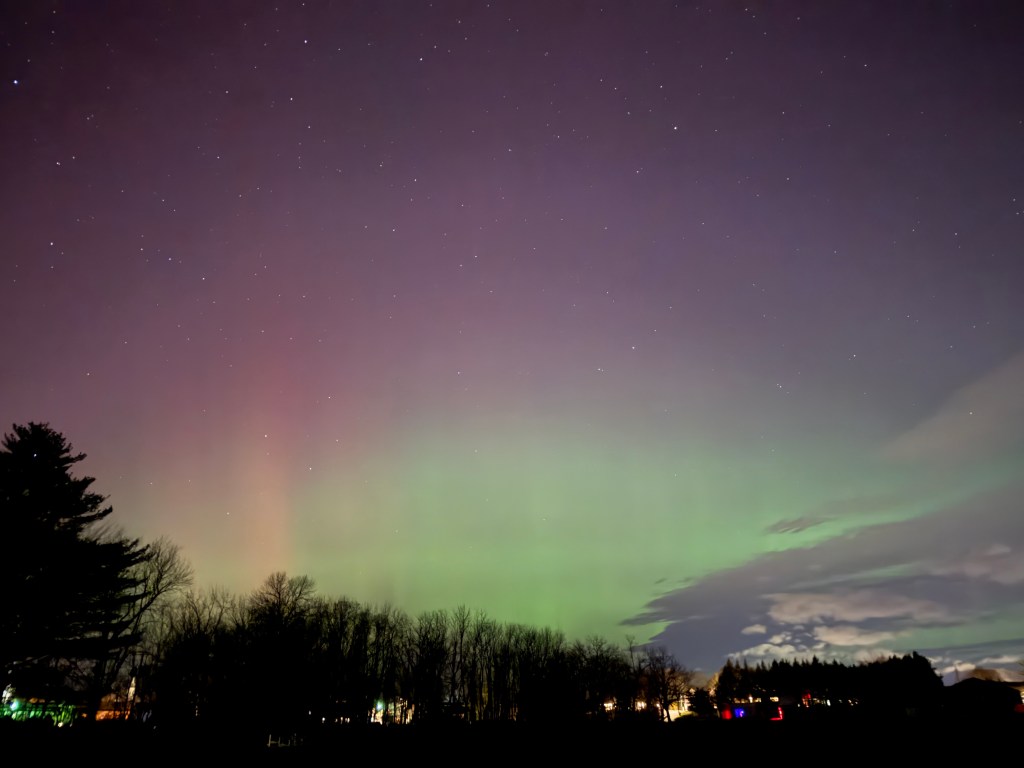
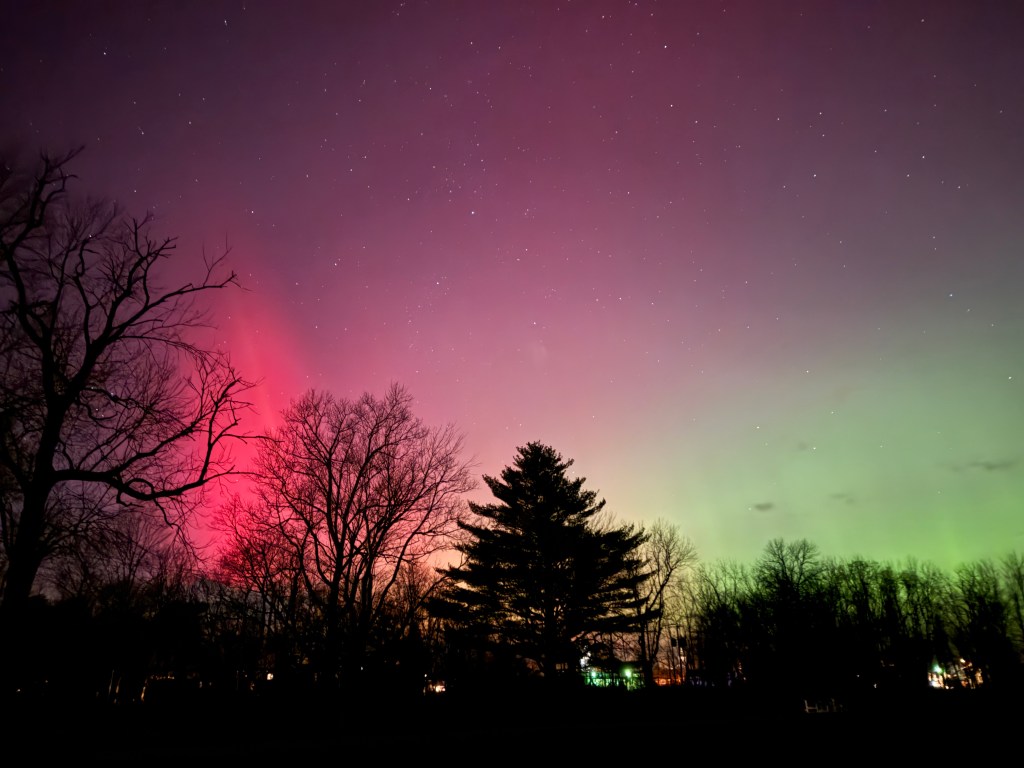
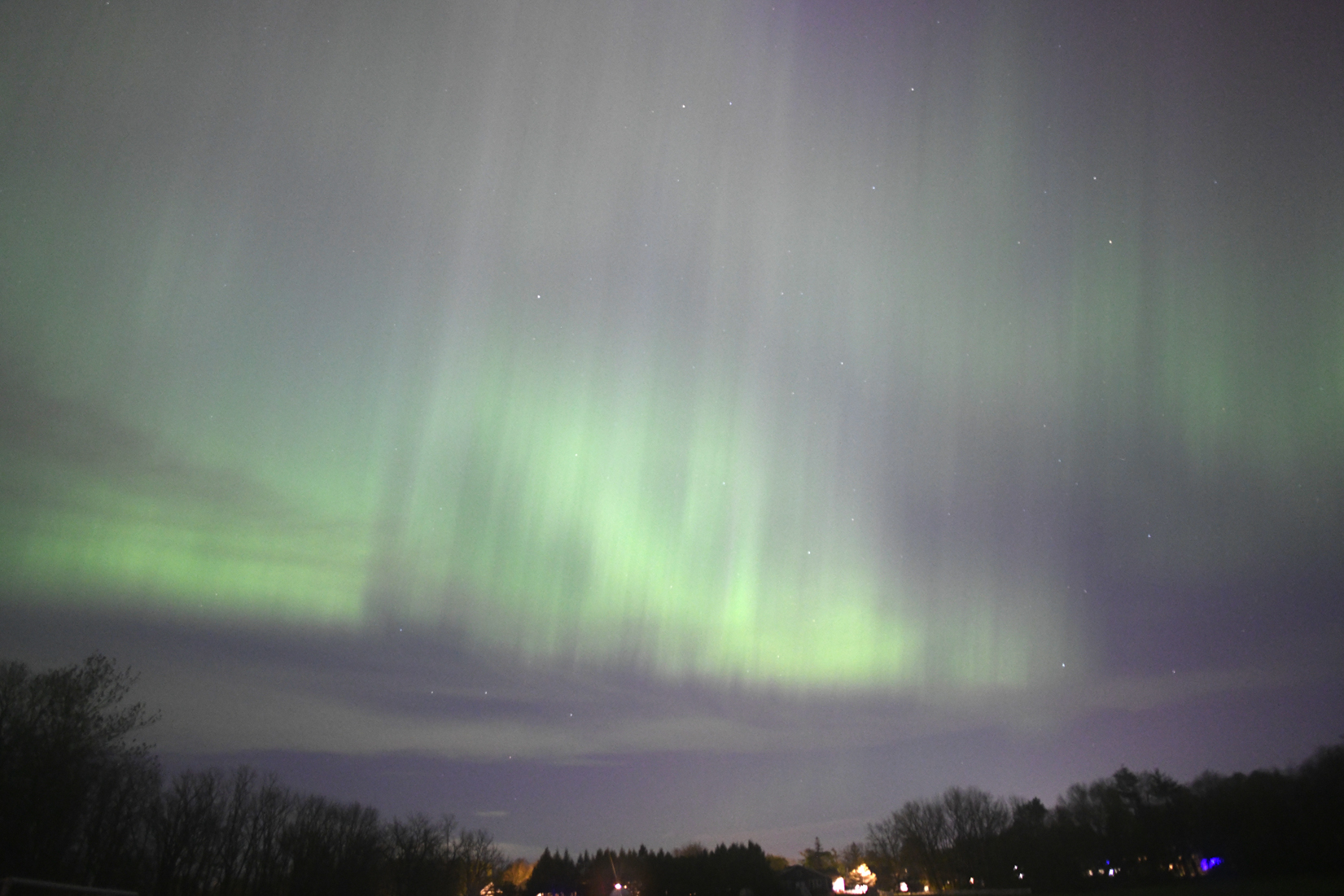
Between November 10 and 13 of this year we had another fine geomagnetic even caused by several CME that were hurled our way from a large sunspot group that was busy generating X class solar flares and associated CME outbursts. Aurora was seen across all of New Hampshire, through the entire continental USA and into Mexico. Emails came to us from friends in Arizona, showing aurora with saguaro cacti in the foreground: quite a sight! It was, fortunately, clear here that night after about 9pm until 2am, so we saw some fabulous aurora here. The magnetometer was also running and captured the event. Below you will find the images from both cell-phone and Nikon Z8 as well as the magnetometer traces. Note the times on these are in UTC for the days November 10, 11, 12, 13, 14. The Y-axis are in units of nT. Each day at 00h UTC, the variance is reset to 0nT by design.
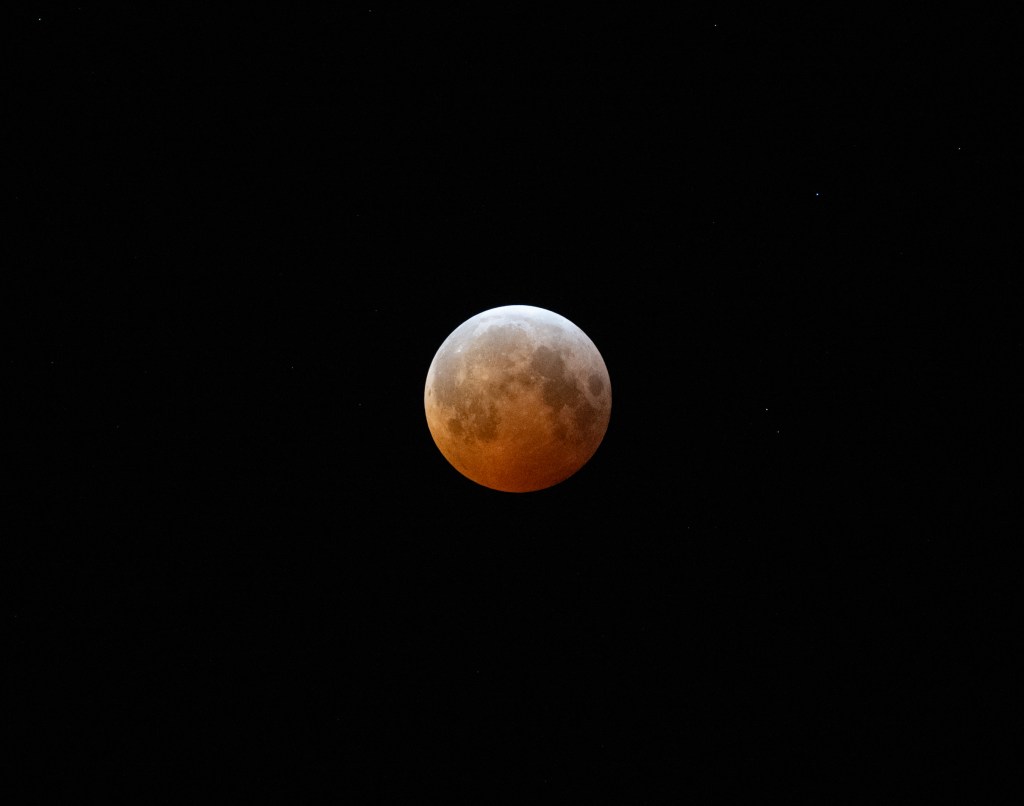
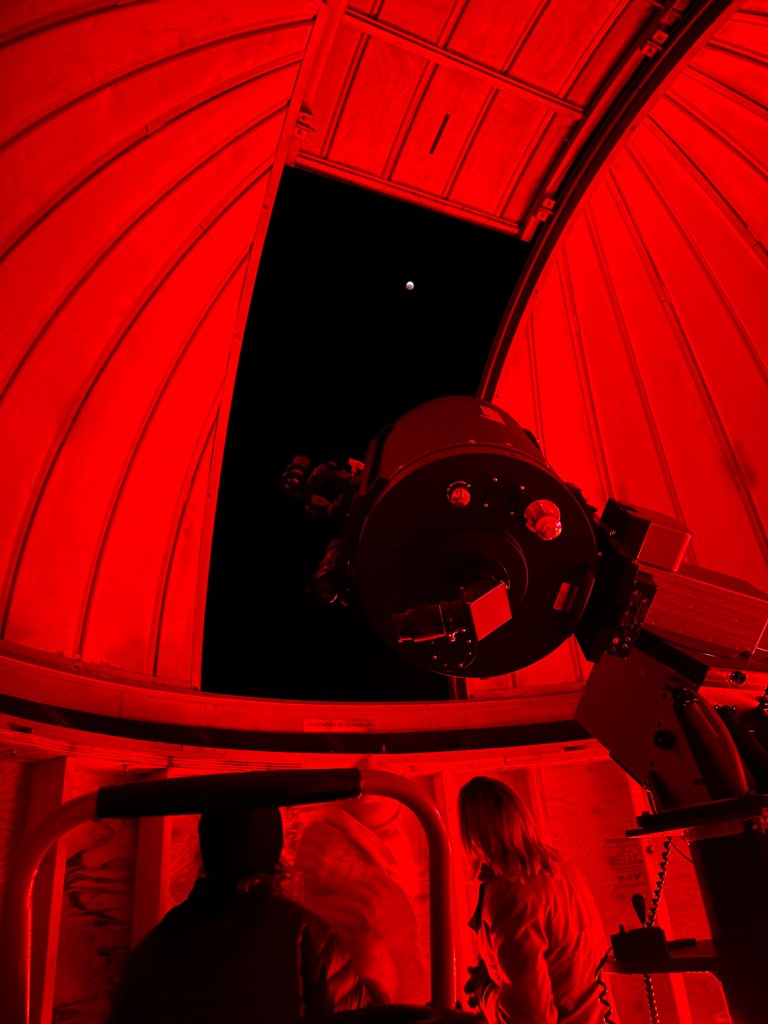
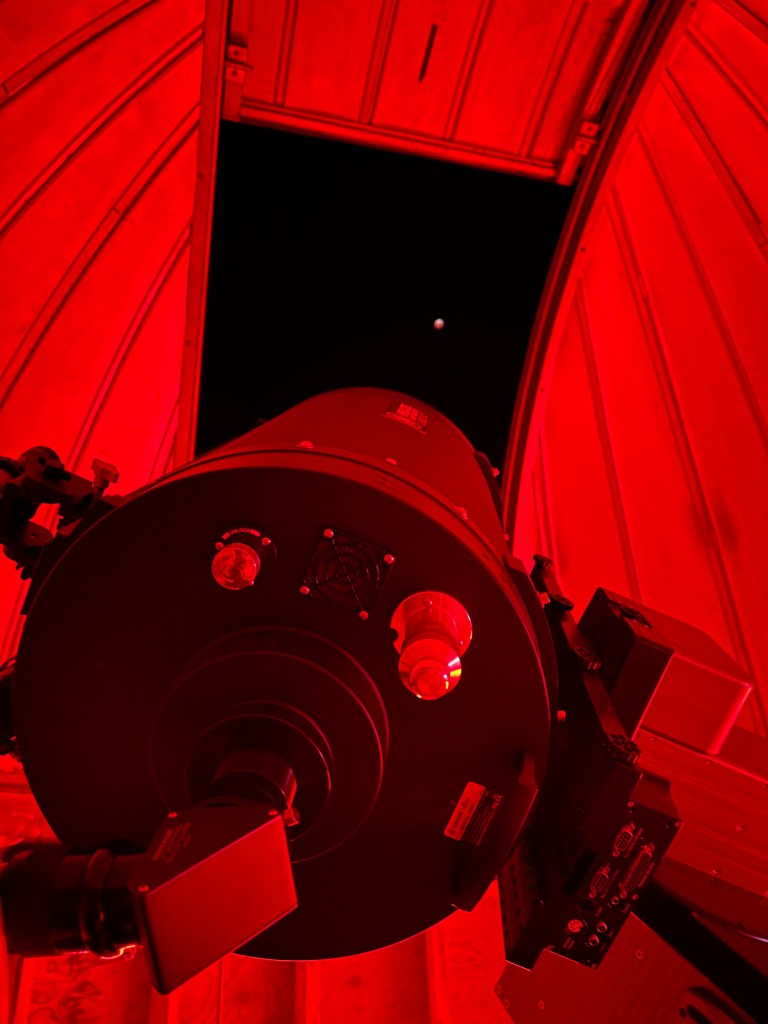
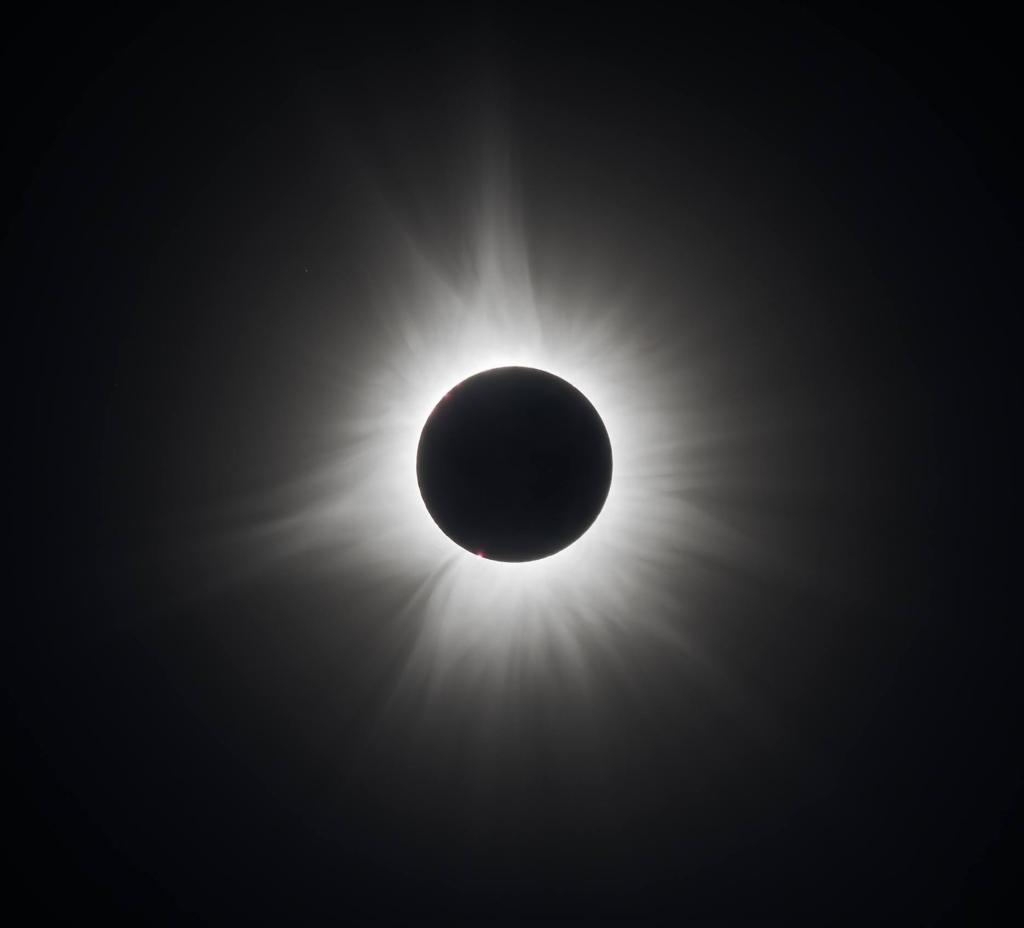
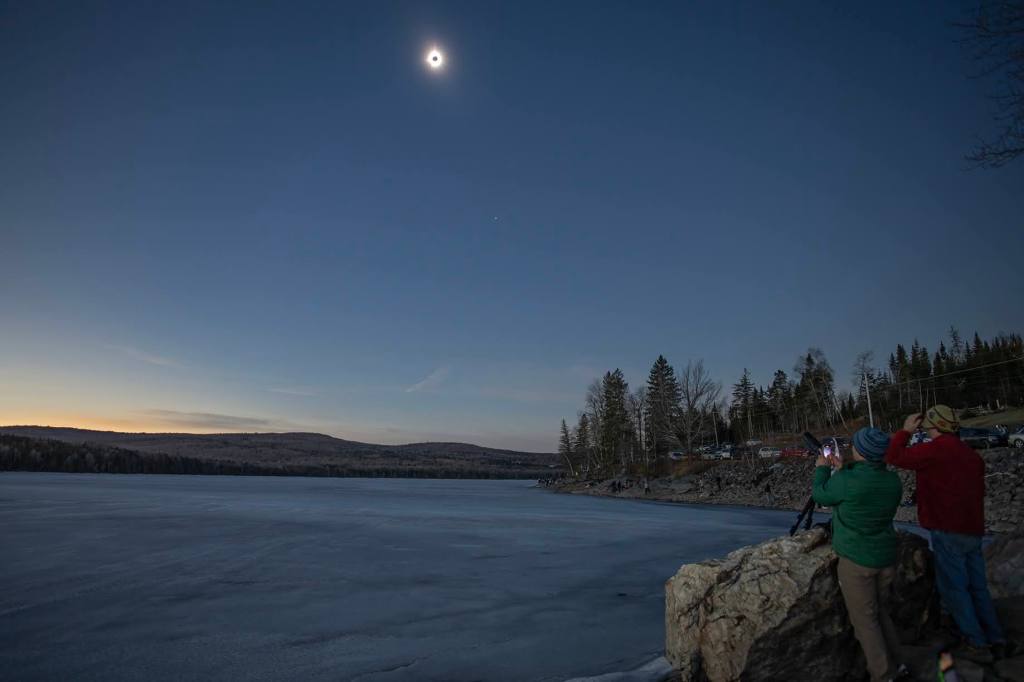
Eclipses are always exciting, a pleasure to experience. This one was an early morning event with questionable weather…. and it was a complete joy to see! We had clear skies in the end, and a small geroup in attendance in the wee hours of the morning of March 14th. We kept the 16″ Schmidt-Cassegrain telescope open for visitors to enjoy, using our lowest magnification (50mm Plössl). The Moon gave us splendid views. Some images captured of the event are below:
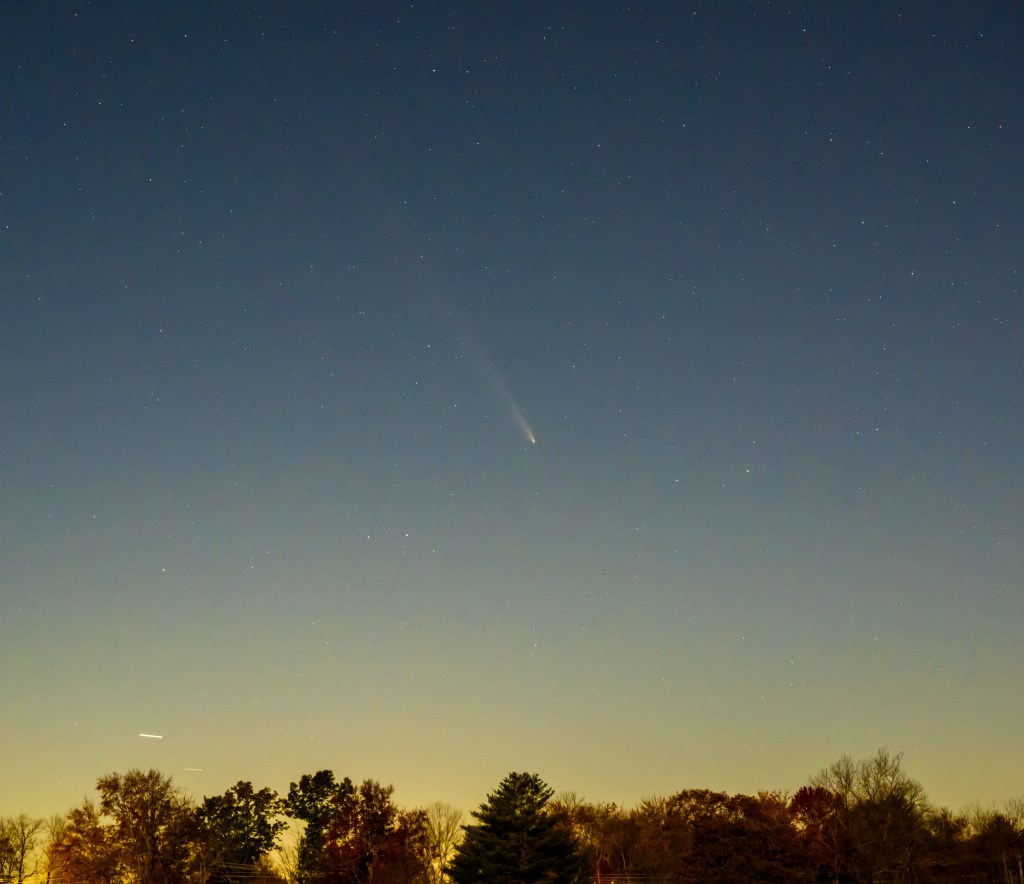
This past month has certainly been spectacular for astronomical events. Aurorae have graced our skies with tremendous activity, Saturn is back to the early evening, as is Venus, and now a comet. The comet, C/2023 A3 (Tsuchinshan-ATLAS) was noted as being the comet of the century, but reservations must always been taken when making such predictions. This was a good comet, but not nearly as spectacular as NEOWISE (C/2020 F3), Comet McNaught, Hale-Bopp, or Comet Hyakutake (C/1996 B2)… all of which were tremendous and easily seen without optical aid. C/2023 A3 was nice but bright only for a brief few days while it was in the glare of the Sun near sunrise then just after sunset. As of this writing, it is rapidly fading though still viaible with small telescopes.
Our first view of the comet here in southern New Hampshire, was on the early evening of 12 October 2024 as it made its way around the Sun and approached Earth. We were able to see it just after sunset from the tallest building on campus, the Library. Looking west, it was only visible for about 30 minutes, but easily photographed with a telephoto.
By 17th October the comet was up for a longer period but was already fading. We captured a lot of imagery this evening with a group of students and faculty by the Hill Bridge looking back to the southwest over the Field House.
Note that the anti-tail is faintly visible in the above image.
By 18th October the comet was considerably higher in altitude and even fainter. I was unable to see it without a pair of binoculars. The comet was still not visible to the observatory domes. Image below.
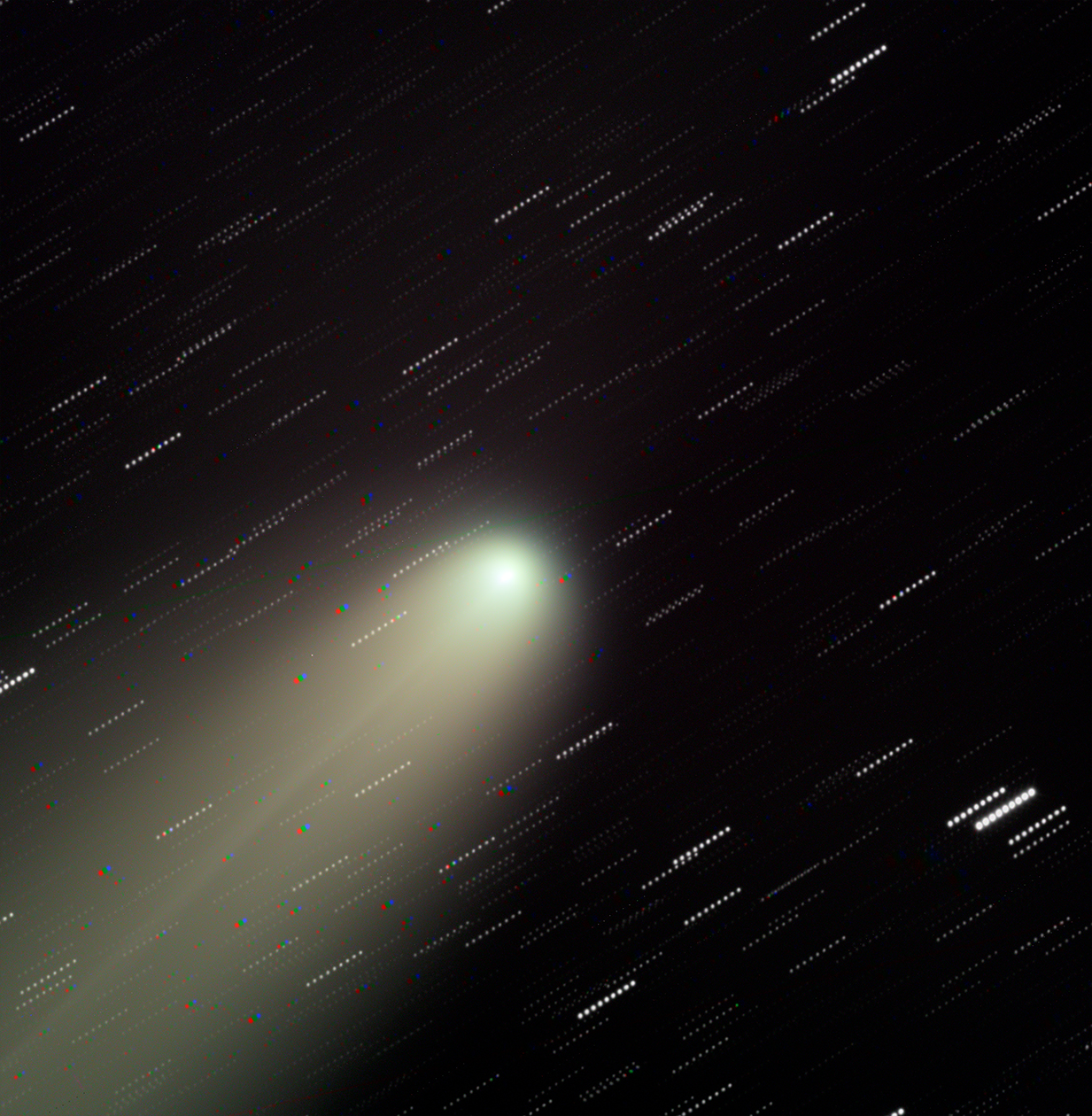
On 24th October, the comet had risen enough to be visible in the 0.7m telescope, so we gave it a go and imaged in Lum and RGB for the following close-up images. These are about 25×25 arc-minutes in dimension. Each is a 20 minute total integration comprised of ten, 2-minute integrations. One is summed and shows the stars as a series of points giving a good indication of the comet’s rapid movement relative to the background stars. The other image is a median which removes the stars and allows one to enjoy the comet’s details without distraction.
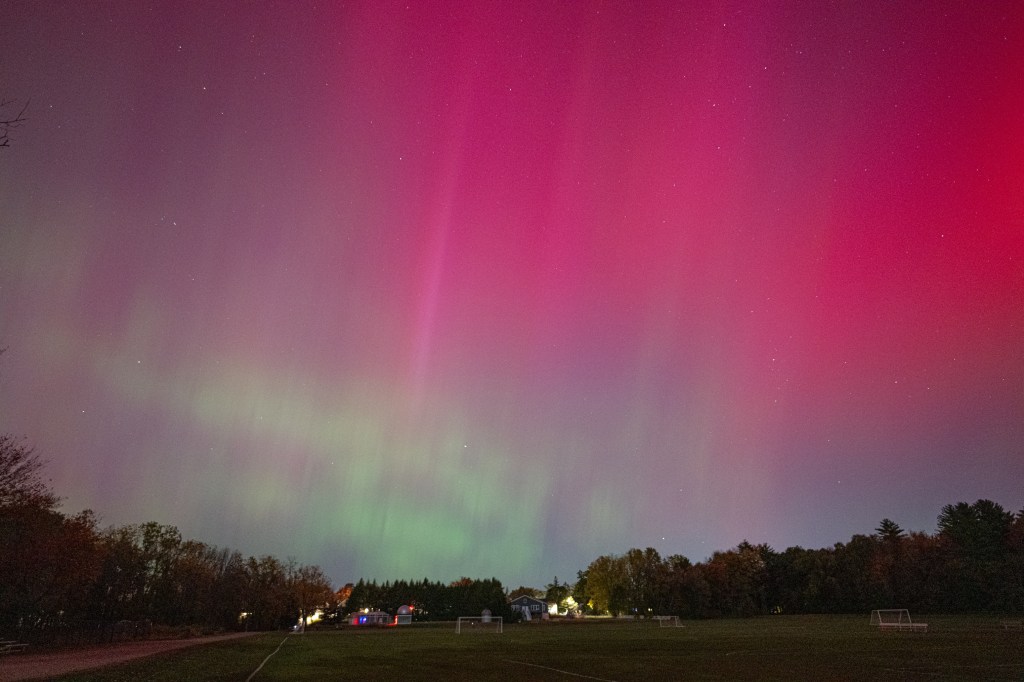
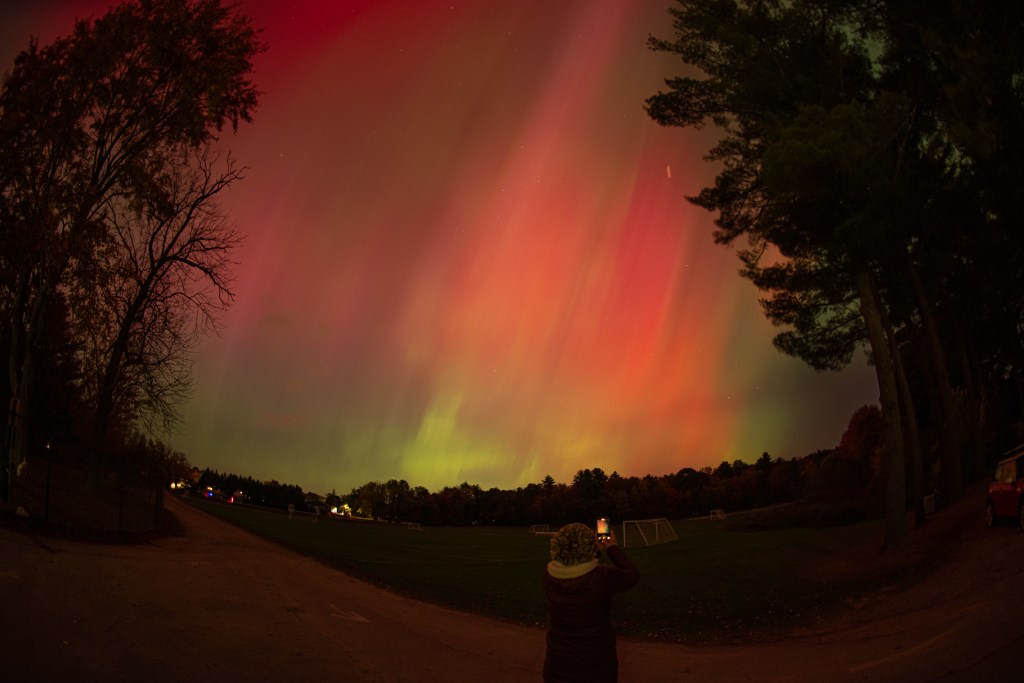
Here are just a select few of the many hundreds of images we took on the night of Oct 10/11, 2024 from the campus fields. The observatory is in the distance to the north. Most of the night, aurora surrounded those of us in the fields: to the north, south, east and west. At times it was so bright that the cameras had to be adjusted so as not to overexpose. Two systems used: Nikon Z9 with 20mm, and Nikon D810A with 16mm fisheye. I got tired just after midnight, and the sky was still aglow. Reports have been coming in that it was still an active storm here until sunrise on the 11th. Quite an event!!
This has been quite the spring for astronomical activity! We’ve enjoyed a total solar eclipse, and now one of the largest auroral storms in some 20 years (the last big one was the Halloween storm of October 2003). Leading up to this event was the appearance of the huge sunspot groups 3668 and 3664.
As this group started to send out massive coronal mass ejections, it became apparent that these were headed right towards Earth: a good sign for geomagnetic phenomena, storming and auroral activity. The Space Weather Prediction Center started posting advanced watches then warning as the 11th of May approached. Sure enough, several of these CMEs combined into one large mass of solar material and slammed into our planet’s magnetosphere: aurora!
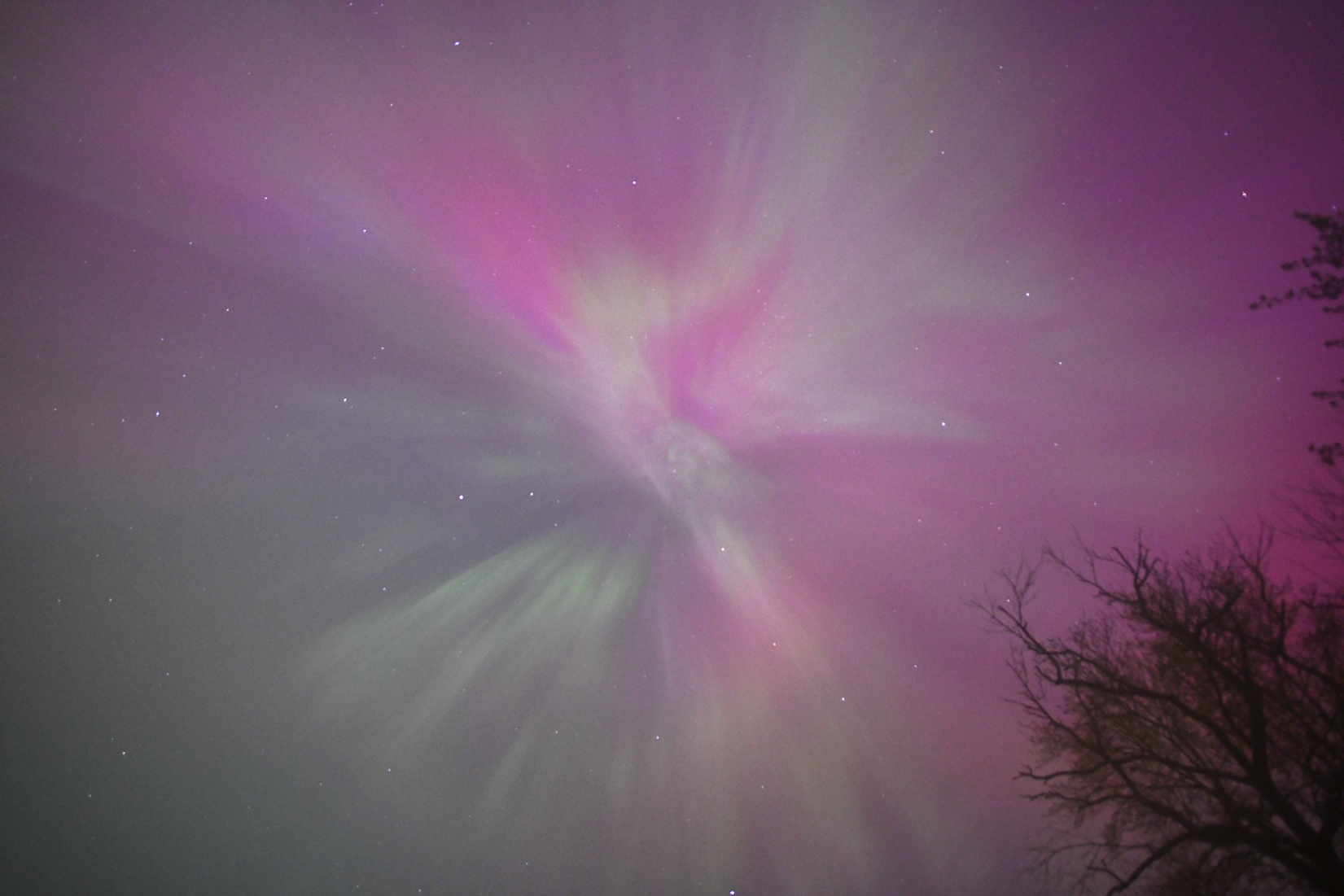
Starting out as faint greyish clouds, we knew these were not regular clouds as they danced and shifted shapes every few seconds. One moment, they would be small patches of light, the next, they would shoot up to the zenith and glow brightly before vanishing completely. As the storm progressed, color became apparent to the eye: pinks, greens, and violets started to show among a wall of color and light that filled most of the northern half of the sky.
We had set up two cameras to watch the storm progress: 20mm f/1.4 1000iso 1.3 second exposures all night long. Occasionally we’d shift their pointing direction to discover that fainter aurora was visible all the way to the southern horizon! Activity was rapid, changing constantly and colorful.
At the peak of the storm, there was considerable merging of aurora at the zenith. Below id a time lapse of this. The camera took a 1.3 second exposure with a separation of 1 second between each image. Here in the time lapse, each photo frame is 1/10 second in duration. The bright light passing through the video is a med-evac helicopter that passed overhead from Exeter Hospital.
All images taken from Pittsburg, NH, USA along the shore of Lake Francis. The closeup images were made using Nikon D850 and 500mm focal length lens. The wide field frame is from a Nikon D6 and 20mm wide field lens. All photos by J.A.Blackwell.
As school gets out in early June, the time to start the maintenance routing begins. This all needs to get done before the Exeter Summer Session, a six week program that runs all of July and into the first two weeks of August. Checklist of To-Do items:
Wet clean all surfaces of the dome interior including the dome-to-structure interface (pollen and construction debris, spider webs, etc); walls; mount; telescope tube exterior; cables.
Remove any wasp nests and mud-doubed nest material.
Sweep out the debris on the floor, wet mop as needed.
Dry!
Micro-dust vacuum the optical tube interiors (open tube systems only).
Clean the optical surfaces.
Clean the eyepieces. These get really used hard and do not act favorably to eye makeup or DEET. Some get tossed, sadly, each year.
Replace lubricant on two of the mounts which get annual lube changes. We use Lubriplate 105 for the worm and drive gears on the Paramounts, per Software Bisque’s maintenance plans.
Replace any optical components that have given-in to New Hampshire weather conditions. Usually the V Photometric filters are first to go, as their glass recipe is reactive to high humidity and sea salt nuclei in the air. Being near sea level does not help.
Take new darks, biases and flat field frames.
Clean out any debris in the weather station.
This last year we replaced the rubber matting that seals the dome-to-structure interface, covering the rollers and the opening to the outside world. The original covering was thirty years old! The new material is a smooth surface and not porous like the previous covering. This makes for easier wet cleaning and faster drying.
The results? Clean operational status!
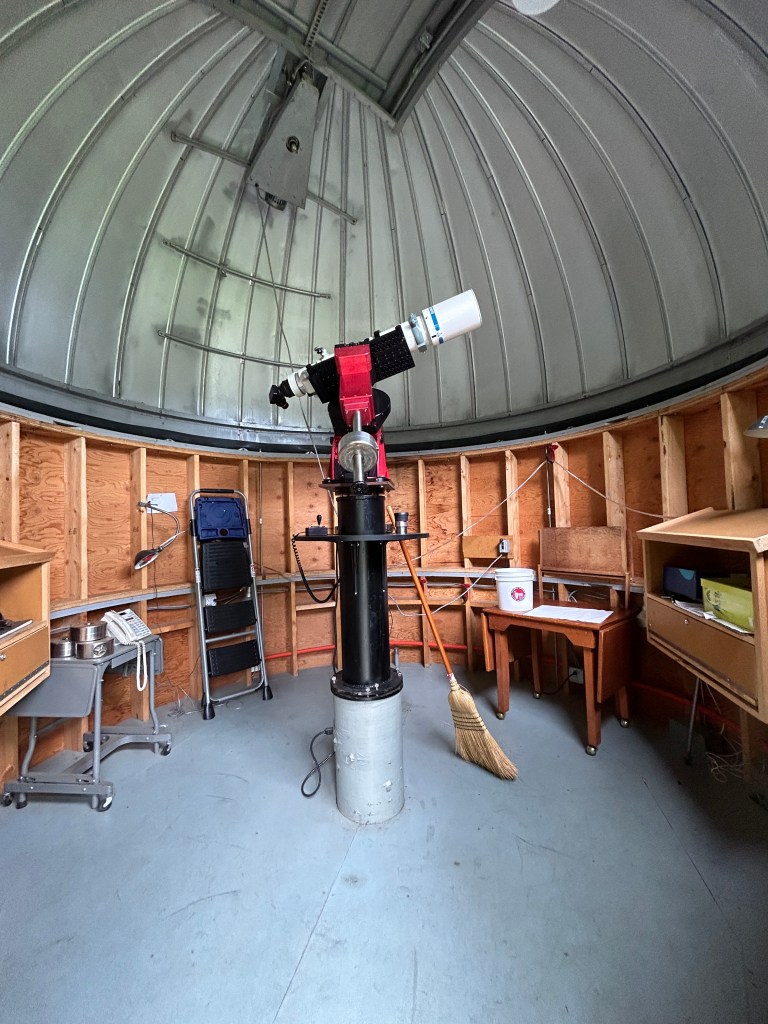
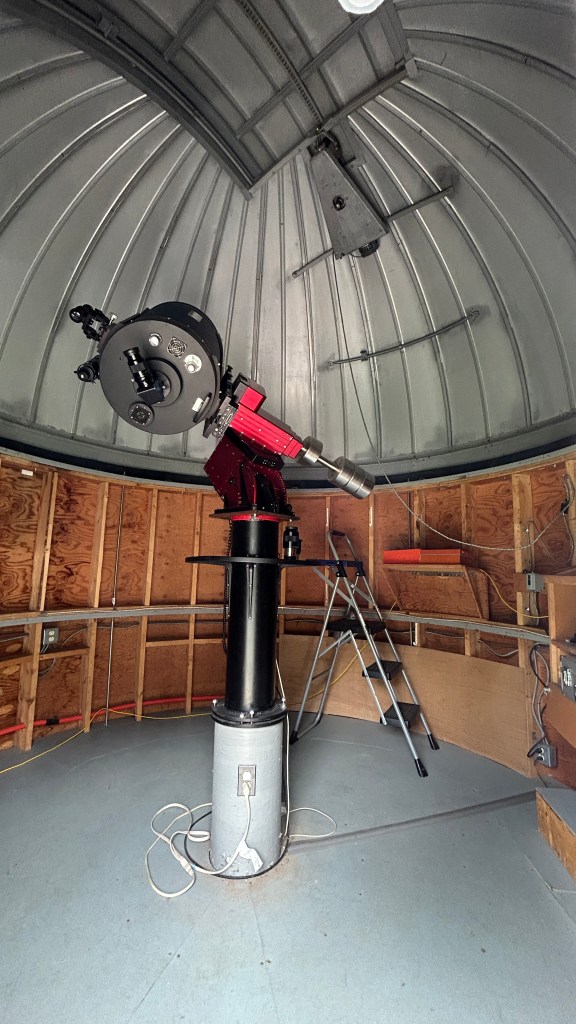
The Takahashi refractor for visual and wide-field photographic use.The 0.7m telescope with CCD and Spectrograph.Kurtz Dome 16″ Meade Flat Field SCT primarily for visual use.
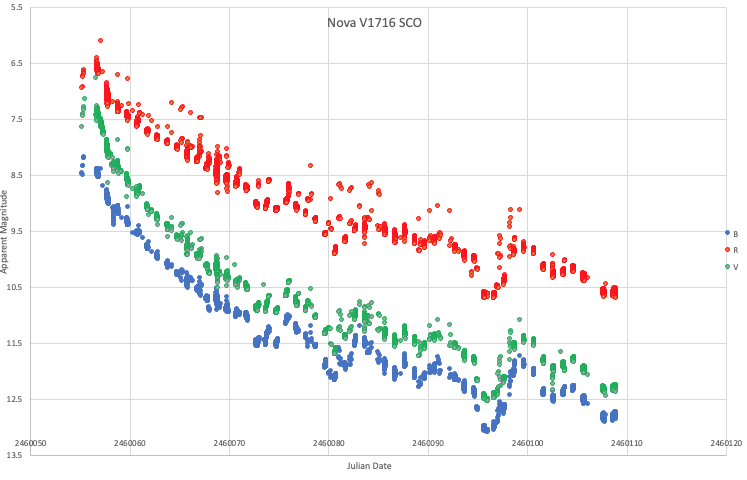
Advanced astronomy classes this spring had the opportunity to hone their skills at image data extraction and analysis with a telescope we have been operating in the southern hemisphere. This spring, a classical nova erupted, reaching V magnitude ~ 6.7 or so before fading. We collected data every clear night in photometric filters, V, B and R for analysis and submission to the AAVSO. When done, students had correctly analyzed 176 data points and submitted those as observer GPE (Grainger Phillips Exeter), our AAVSO initials. Below is a plot of the V, B and R data from the AAVSO which includes our data and those from all the other observers who took part in observing this star.
Apparent magnitudes in V, B and R are on the ordinate. Julian Date is on the abscissa. The colors denote filters used: Red = R, Green = V, and Blue = B photometric filters. We acknowledge with thanks the variable star observations from the AAVSO International Database contributed by observers worldwide and used in this research.
The news is, of course, old to those who have been following the Sun’s activity of late: things are getting more exciting. There are more spots, more flares and more CMEs as we approach solar maximum. Solar Cycle 25 is off to a good start, and interestingly, there are websites which post that it will be weaker than 24… while others show that it will be more active. Official news can be found here: https://spaceweatherarchive.com/2022/01/09/solar-cycle-25-update/
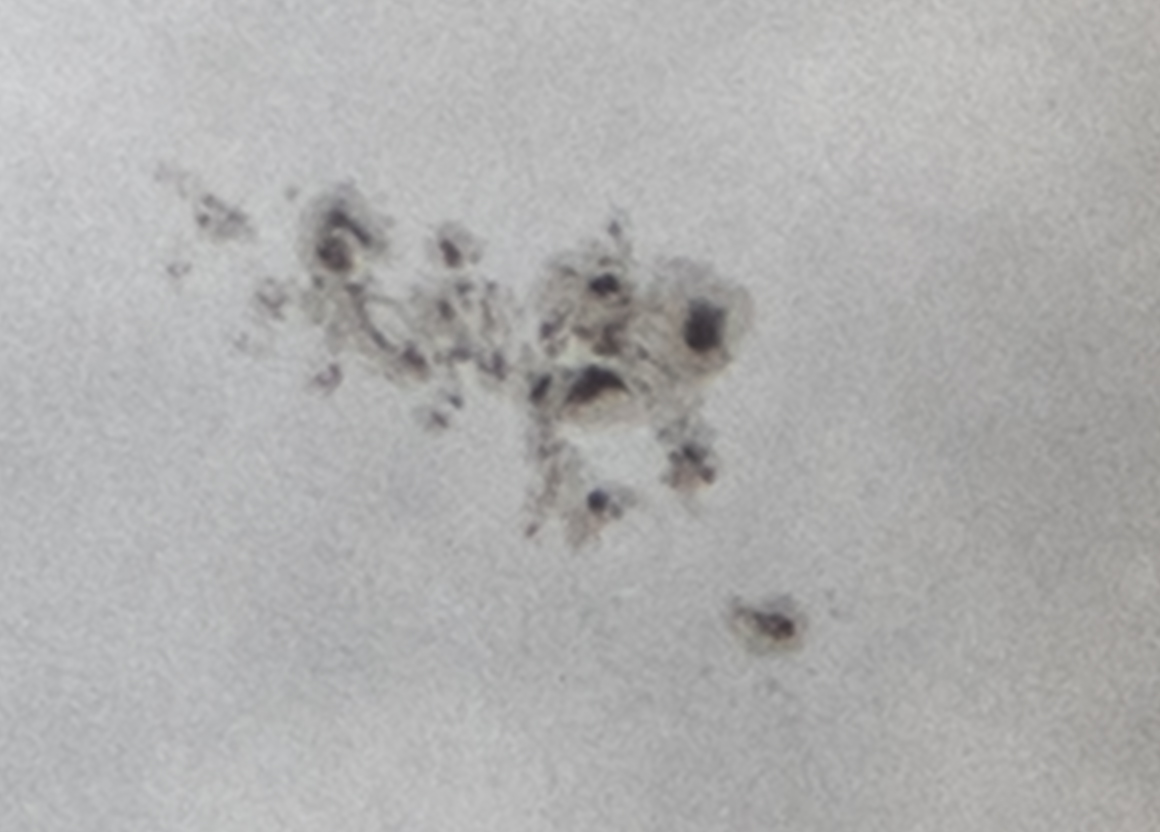
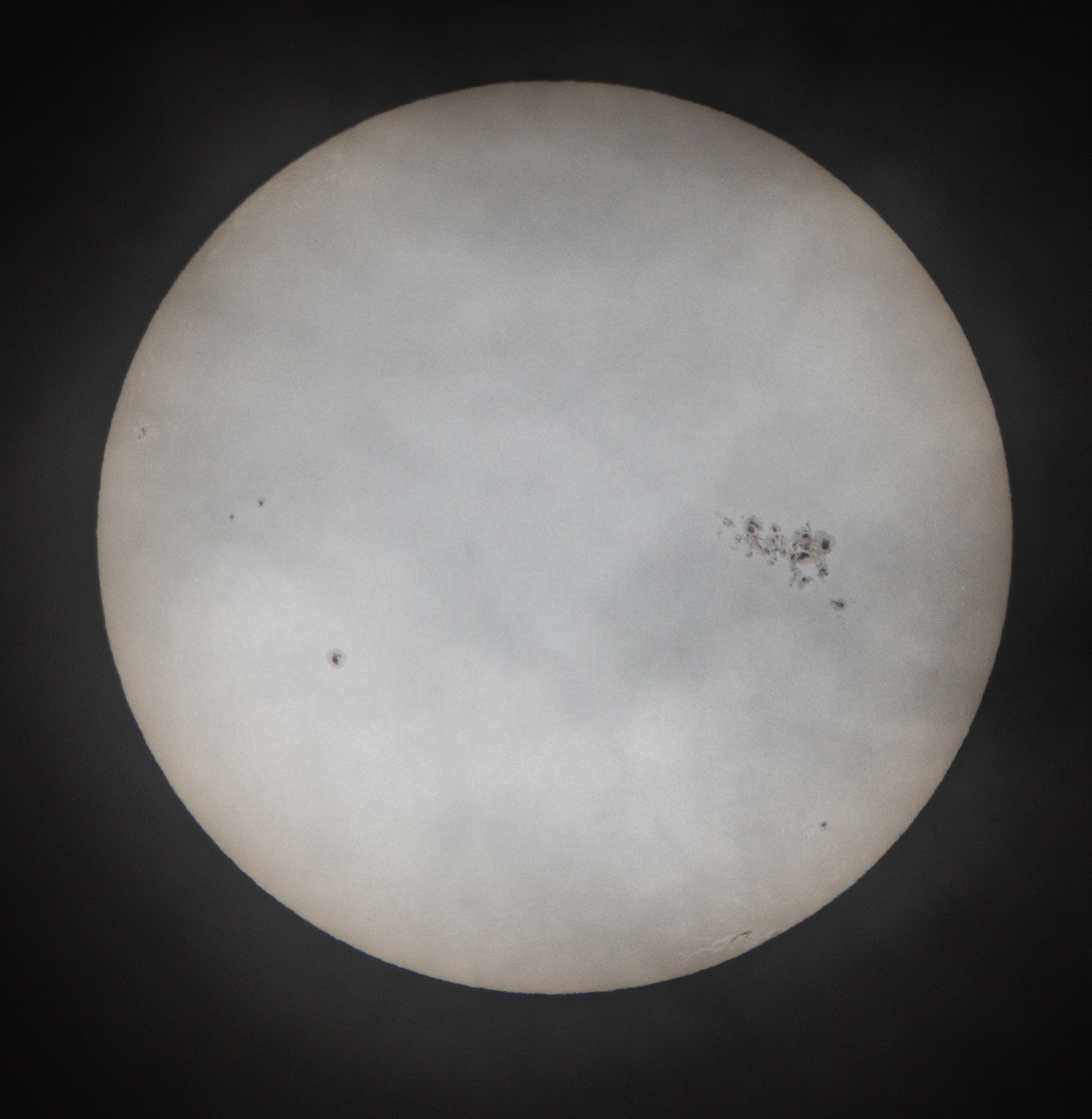
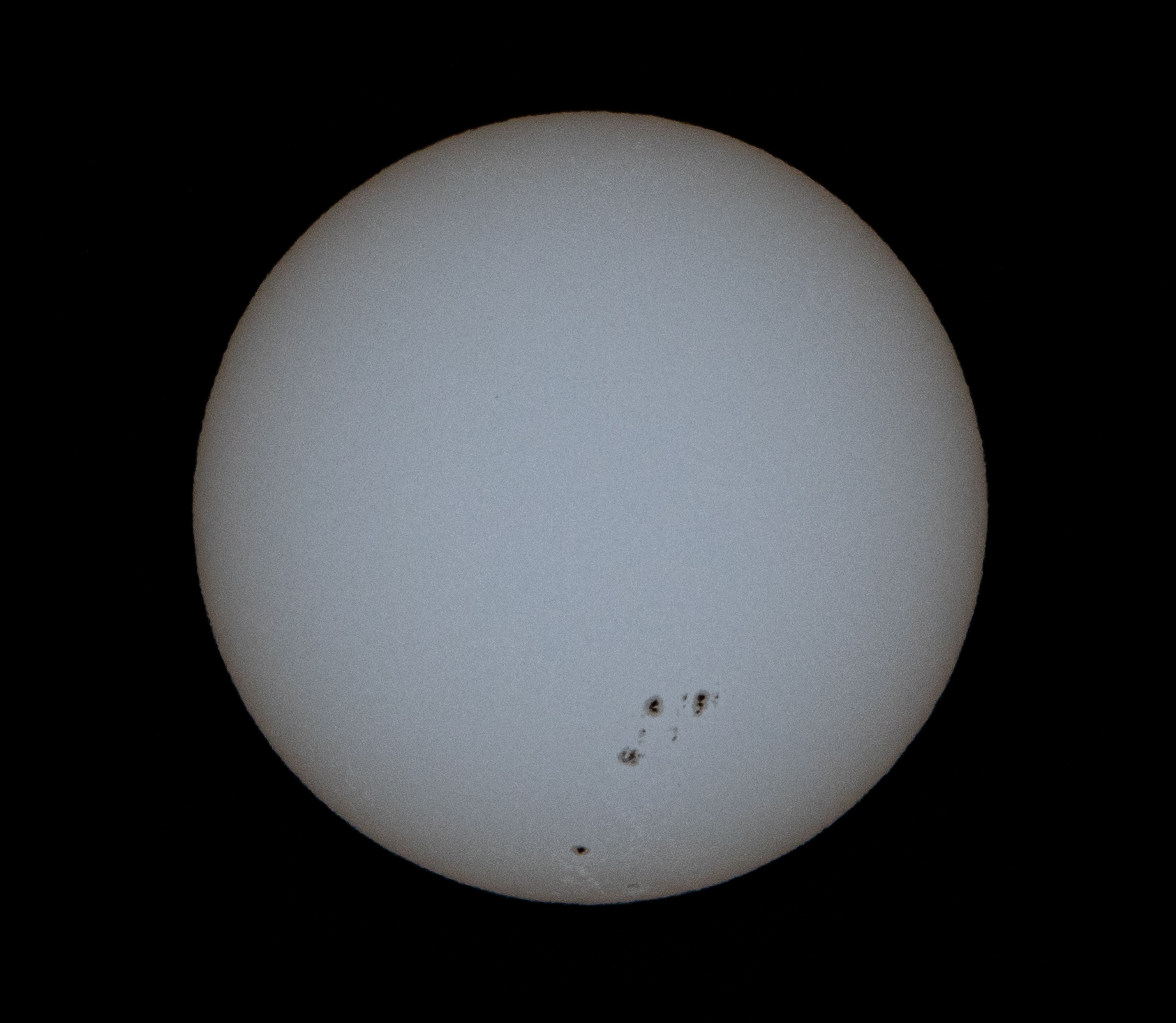
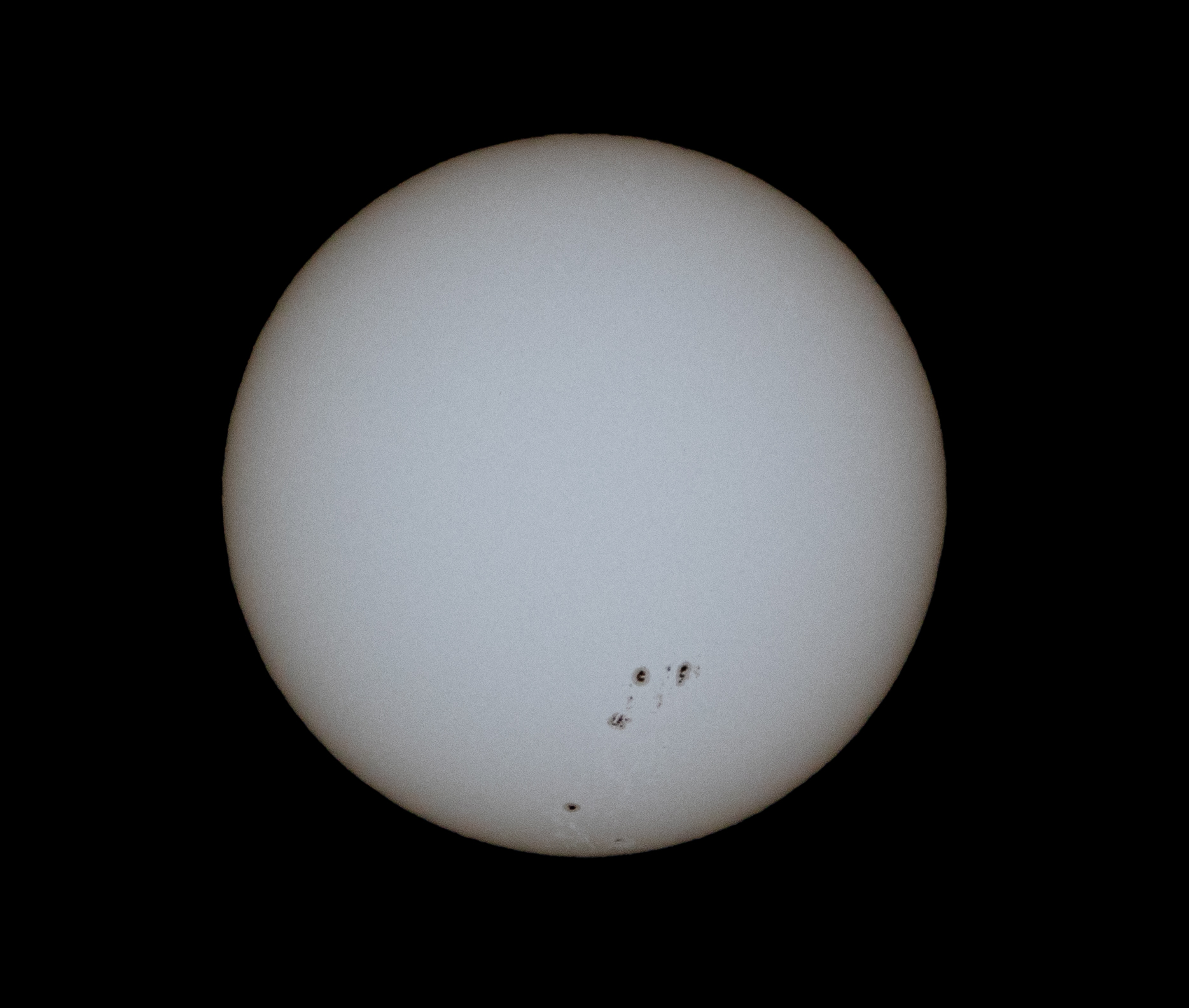
Right now the sunspot counts are higher than the predictions for the cycle. Read into that as you will, as solar physics is still a burgeoning field. The current prediction is for the cycle to reach maximum in mid-2025. With that amateur radio enthusiasts and astronomers will enjoy the changes to the Sun and ionosphere. With the activity, changes to our solar observing practices have been made, so that it can be shared safely with students & adults, and the data collected to send to the AAVSO Solar Group. While all but the 0.7m have solar filters, the results of using a Herschel wedge from Baader along with a 10mm Radian and polarizer on a TV-85 have been amazing. It’s small, light weight, easily transported and will also hold a Nikon D-810 for imaging. Attached are a couple of photos from earlier this week, all taken in gusty wind conditions. Note that if you are intending to get new solar observing gear, the lead times on ordering gear are now long… and solar maximum is coming. Images are below: be sure to click to see full size. The spots are impressive! Clear skies to all.
With this winter term’s Selected Topics in Astronomy class, we chose to give the new 0.7m telescope a workout and see if it could produce results fine enough to detect extrasolar planets using the transit method. The transit method focuses on the slight apparent brightness changes in a star when one of its planets orbits in front of it from our viewpoint here on Earth. Many planets have been discovered this way: The Kepler Mission has over 2800 candidates and 2600 confirmed. The TESS mission has over 2600 candidates and 122 confirmed exoplanet discoveries. So, where to start?
We chose a well-known exoplanet, visible to us in the northern hemisphere, with a predicted brightness change that should be readily visible to our equipment. The predicted transit times needed to be well established and had to start and end during nighttime, so that we could detect the entire transit event. WASP-43b became the primary target. It has a 0.81 day orbit (FAST!) and is a large planet orbiting a small diameter star (spectral type K7 V), making for large changes in brightness. All we needed was a clear night when one of its transits was taking place. Using the Swarthmore exoplanet transit search site (https://astro.swarthmore.edu/transits/transits.cgi) we found a perfectly good transit opportunity on the night of 26 January. The goal was to start photometric observation an hour before the transit started, observe through the entire transit, then end an hour after the event. The goal was achieved!
Images were taken in rapid cadence, one minute integrations each, through an Rc filter to minimize the Earth’s atmospheric effects.
The image above shows the results of the data capture: two plots. The upper plot shows the magnitude of WASP-43 changing through the transit period in J-C Rc magnitudes. X: Time in J.D. Y: Rc observed magnitudes. The bottom plot is of a check star used to validate the data set. We used reference and check star Rc magnitudes from the AAVSO for this study. Note the error bars are small: these represent systemic errors in the measurements based on signal-to-noise values of the individual images. The variances in magnitudes, which are on the order of 0.010 mag, are caused by atmospheric changes and seeing conditions. Exeter, NH is very close to sea level, so we have a lot of air mass to observe through. With these conditions the dip of about 0.040 magnitude in WASP-43’s brightness was easily seen: a success!
This is also an indicator of the observatory’s capabilities. We now know that a typical winter observing run can expect 0.010 magnitude fluctuations in seeing conditions and that a star with m=12, we can expect an excellent signal-to-noise ratio. What’s next? To work on assisting scientists with solidifying the orbital periods of other less known exoplanet systems.


























 ExeterAstro