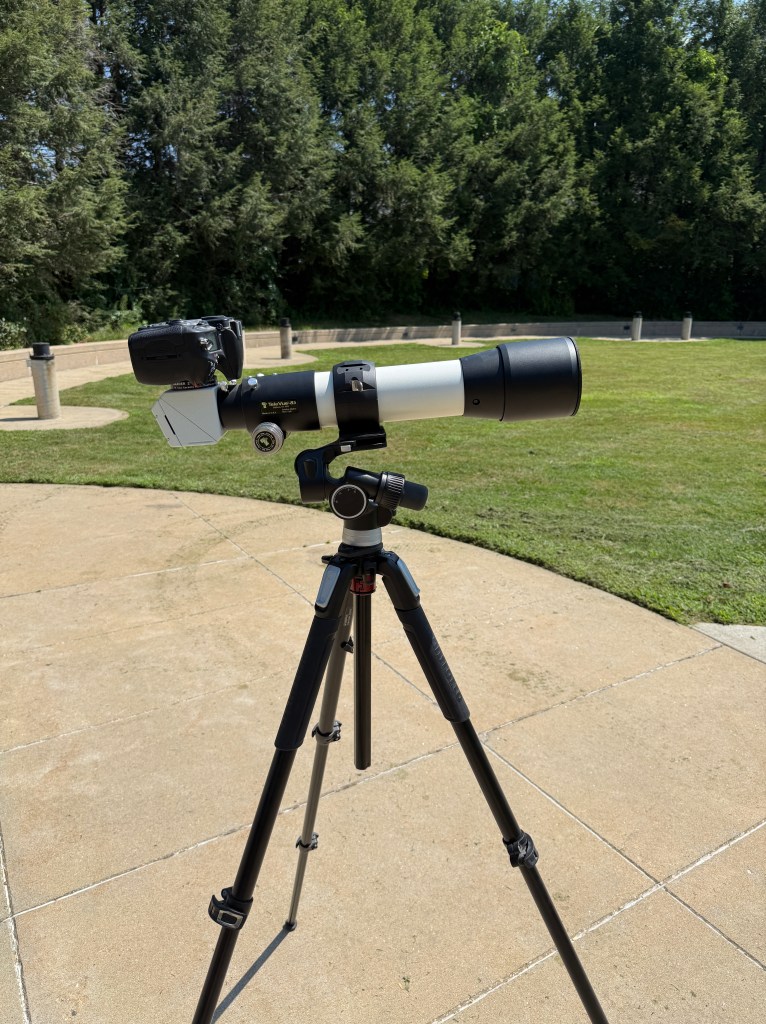
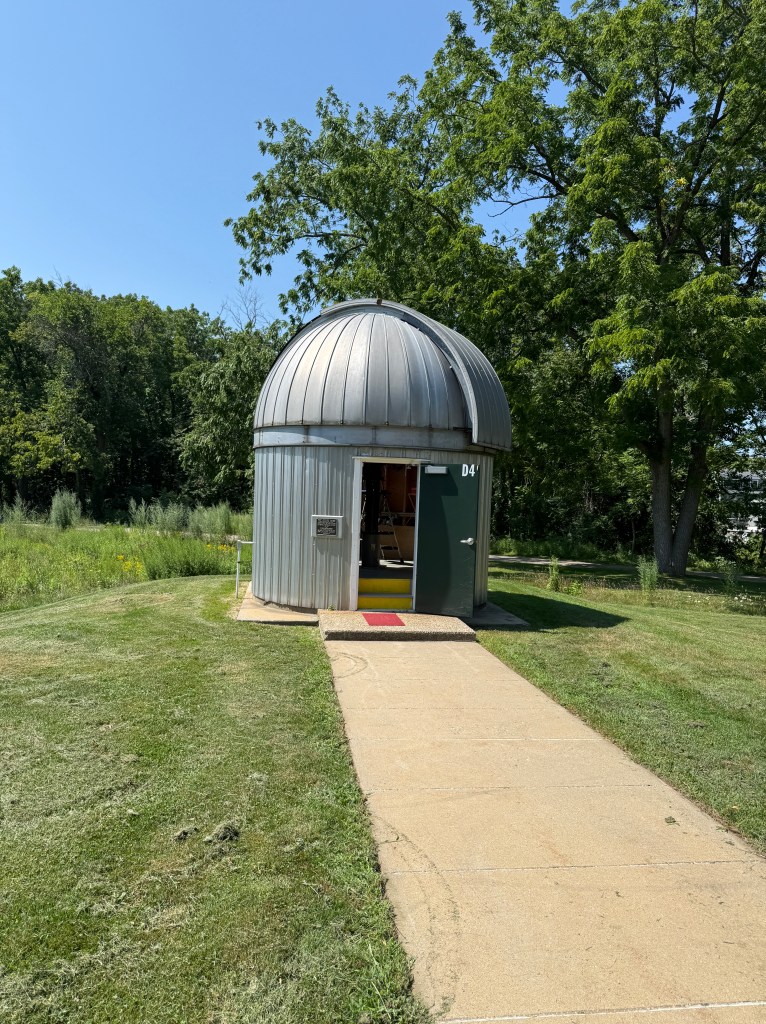
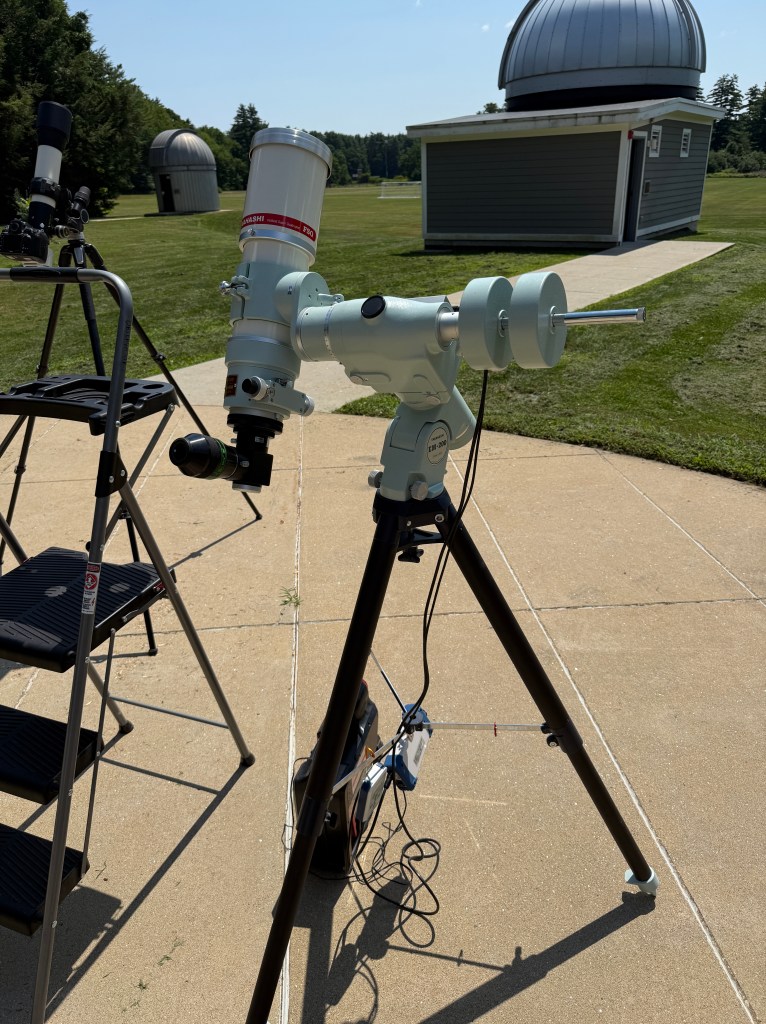
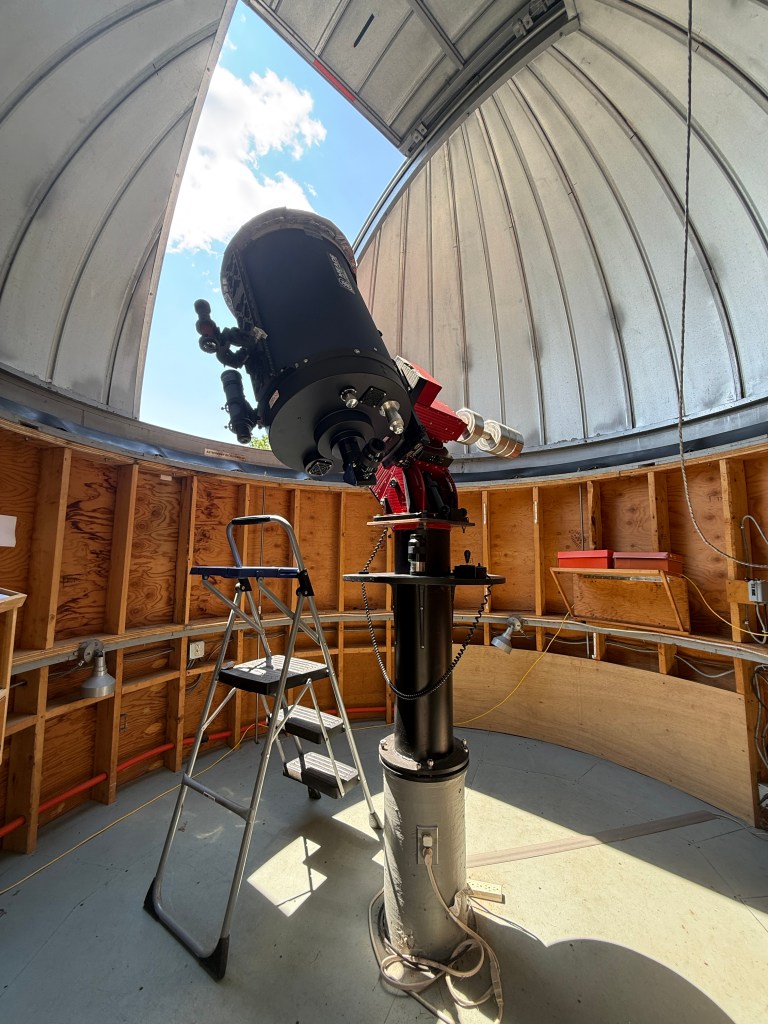
Sunny and clear skies gave us the opportunity for some nice daytime astronomy. Unfortunately the eclipse took place just after Exeter Summer ended, so the campus was very very quiet. We did have a number of visitors, though, and we all enjoyed the partial eclipse using the various gear we had set up: The domed 16″ SCT, a Tak FSQ-106, a TV80mm for photography and eclipse glasses for everyone.
Eclipse series from start to finish using the TV-80mm with Herschel Wedge and D810 DSLR.
Not eclipses are total. Many are partial, and some are annular. An annular eclipse takes place when the angular size of the Moon in the sky is smaller than the angular size of the Sun in the sky. What makes this happen? Distances! The further away something is from your vantage point, the smaller is appears. During the eclipse of 14 October 2023, the Moon is close to its apogee, its furthest distance away from Earth in its orbit (remember that the Moon’s orbit is significantly elliptical). During an annular eclipse, if you are on the eclipse path, you will see the smaller Moon cover the Sun, but not completely. A small thin ring of the Sun will still be visible around the edge of the Moon. Be very careful! Annular eclipses are NOT safe to look at without proper solar filters or instrumentation!
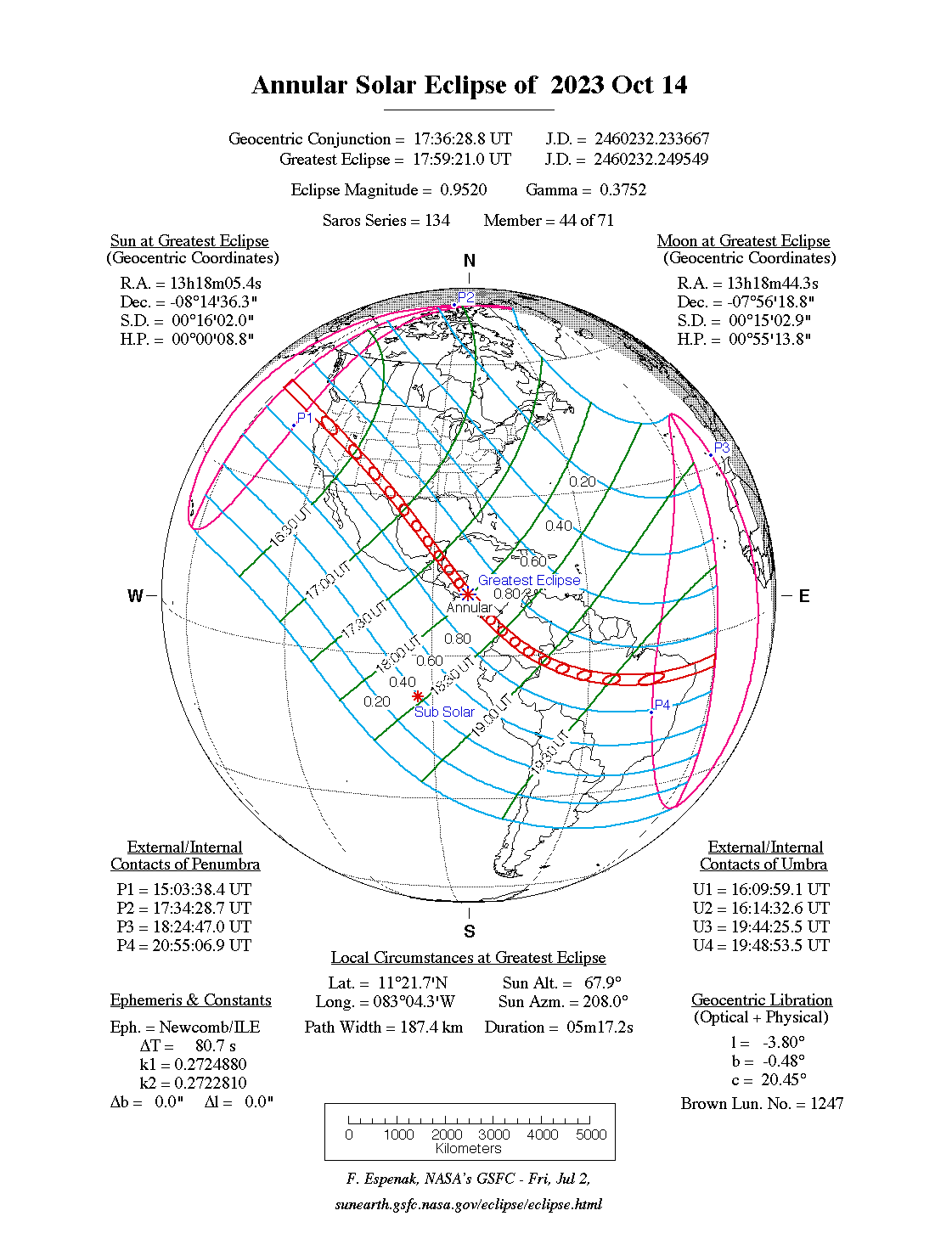
The path of maximum eclipse passes from Texas through to the Pacific Northwest on this occasion. Others across the Americas will see a partial eclipse, an equally exciting opportunity. The chart below (NASA) shows the path.
14 October 2023 Annular Eclipse Map
A reminder: Observe safely. Even when this eclipse is in full annular mode, it is not safe to look at. It is also not safe to aim your camera at for any length of time, as your lens system could suffer damage, as could the sensor and shutter mechanism. Use proper filters!